2026
2nd International Conference on Circularity, Sustainability and Resilience in Water, Wastewater and Sludge Management, 29/03/26 – 01/04/26, Thessaloniki, Greece
Multifunctional Porous Carbon Textiles decorated with Bimetallic MOFs for Air & Water Decontamination via Adsorption-Catalysis Synergy
Fivos Florides1, Kyriacos Ioannou1,2, Marlena Bytniewska1, Nikolaos Kostoglou3, Anna Michalicha4, Claus Rebholz2, Mariusz Barczak1, Dimitrios A. Giannakoudakis1*
1 Faculty of Chemistry, Maria Curie-Sklodowska University, 20031 Lublin, Poland
2 Department of Mechanical and Manufacturing Engineering, University of Cyprus, 2109 Nicosia, Cyprus
3 Institute of Geoenergy, Foundation for Research and Technology – Hellas, 73100 Chania, Greece
4 Chair and Department of Biochemistry and Biotechnology, Medical University of Lublin, Lublin, Poland
ABSTRACT: The development of advanced materials for air and water purification, ranging from household filtration systems to protective media for crises such as gas masks, demands innovative and multifunctional adsorbents. Nanoporous carbon textiles (C-Texts) are highly promising due to their high surface area, tunable surface chemistry, low weight, and cost. However, optimizing C-Texts remains challenging, and two approaches are followed: (i) tuning of key physicochemical features and (ii) nanoengineering through the incorporation of active nanophases. Organic micropollutants, including pharmaceuticals, represent a persistent source of water contamination, while chemical warfare agents (CWAs), such as blister and nerve agents, continue to pose serious threats.This work highlights strategies to enhance the multifunctional performance of C-Texts for both air and water decontamination. We first evaluated the adsorption efficiency of commercial and chemically modified C-Texts, identifying the physicochemical parameters most critical to performance, while systematically investigating the influence of humidity under realistic conditions. Further improvements were achieved by developing scalable, cost-effective methods to decorate C-Texts with minimal loadings of mono- and bimetallic Metal-Organic Frameworks (MOFs), specifically ZIF-based active phases. The resulting hybrid textiles exhibited superior removal of diclofenac from water, and detoxification of CWAs vapors and droplets, alongside extra-high antibacterial efficiency. These enhancements are attributed to homogeneous nanoparticles dispersion and synergistic adsorption-catalysis interfacial effects, enabling efficient catalytic detoxification coupled with strong and stable retention of hazardous molecules.
Acknowledgements: The work is financially supported by the National Science Centre (NCN) of Poland via the SONATA-19 grant 2023/51/D/ST5/01915 (PI: D. Giannakoudakis).
.
Porous Materials for Environmental Applications (PMEA), 15-19/3/2026, Białka Tatrzańska, Poland
INVITED SPEAKER
Bimetallic MOF Composites Decorated on Porous Carbon Textile for Multifunctional Air and Water Purification via Catalysis–Adsorption Synergy
Fivos Floridesa, Kyriacos Ioannoua,b, Marlena Bytniewskaa, Nikolaos Kostoglouc, Anna Michalichad, Claus Rebholzb, Mariusz Barczaka, Dimitrios A. Giannakoudakisa*
a Institute of Chemical Sciences, Faculty of Chemistry, Maria Curie-Sklodowska University, 20-031 Lublin, Poland
b Department of Mechanical and Manufacturing Engineering, University of Cyprus, 2109 Nicosia, Cyprus
c Institute of Geoenergy, Foundation for Research and Technology – Hellas, 73100, Chania, Greece
d Chair and Department of Biochemistry and Biotechnology, Medical University of Lublin, Chodźki 1, 20-093 Lublin, Poland
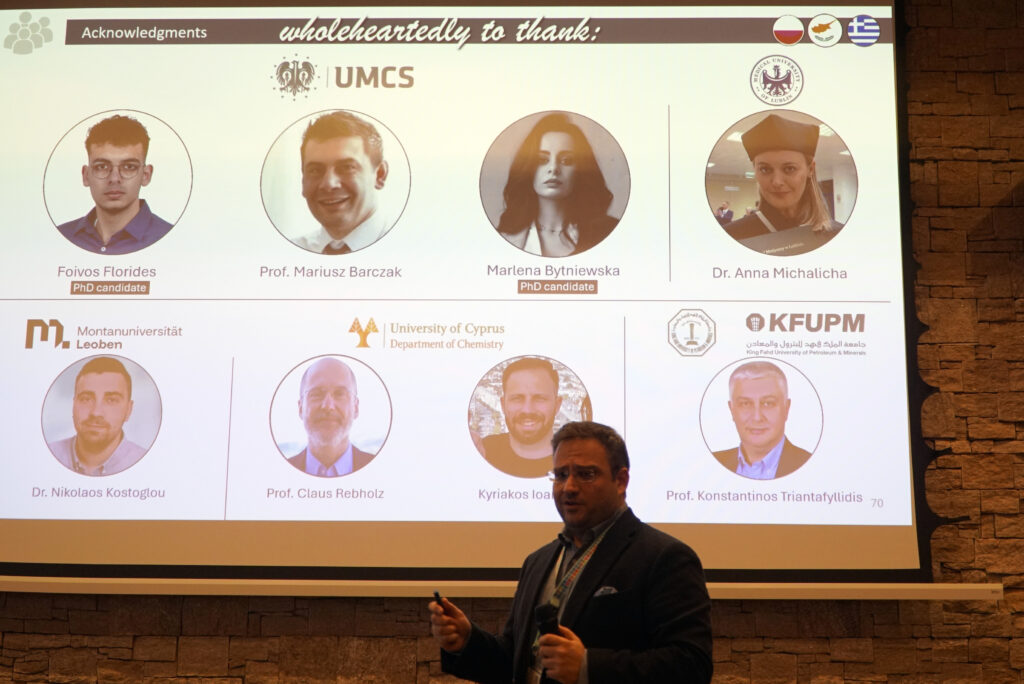
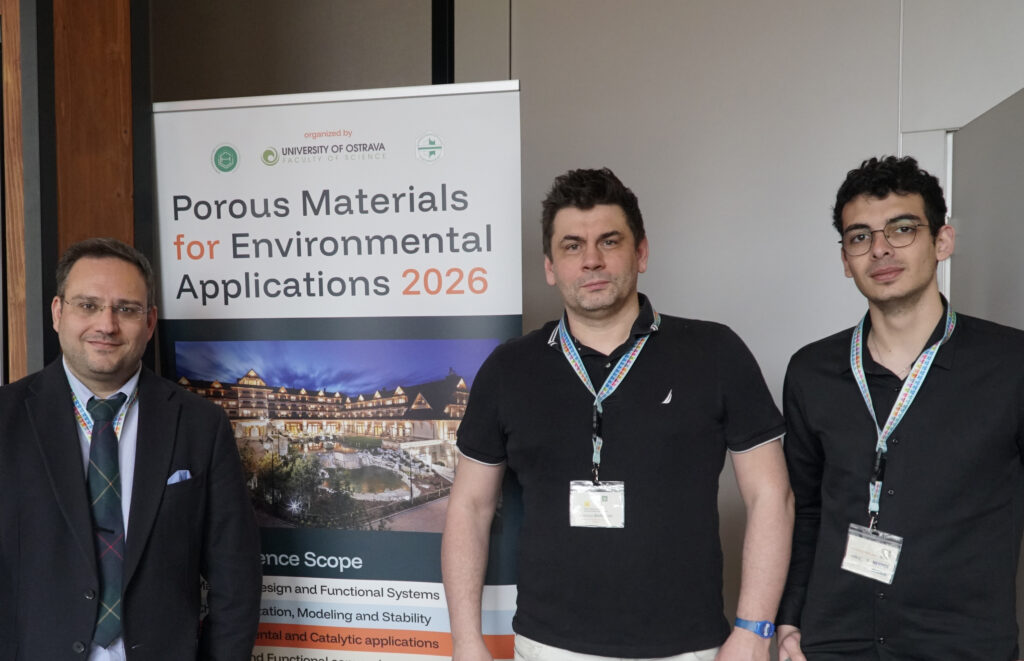
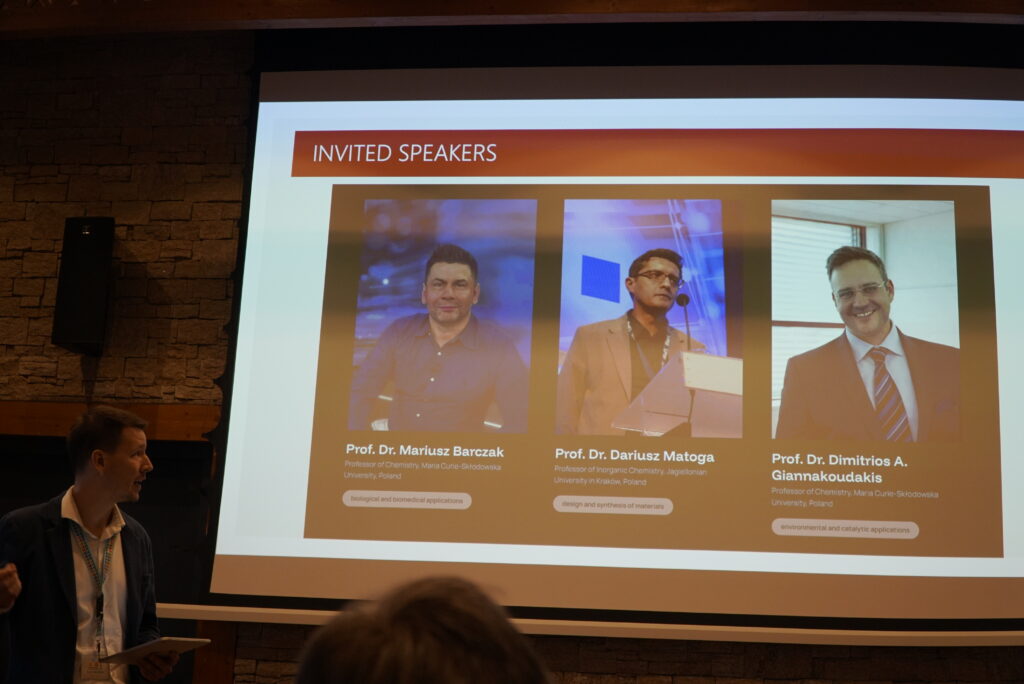
ABSTRACT: The development of next-generation materials for air and water purification, ranging from household filtration systems to personal protective equipment for emergency or crisis situations, such as gas masks and garments, requires multifunctional remediation media capable of capturing, degrading, and neutralizing diverse hazardous species. In this context, the synthesis of reactive nanomaterials plays a key role [1].
Metal-Organic Frameworks (MOFs) possess unique physicochemical characteristics, including high and hierarchical porosity, accessible reactive centers within their pores/cages, and the ability to exist as nanostructured particles. However, their practical deployment is limited by several drawbacks, such as insufficient thermal and chemical stability, particularly poor resistance to humidity, high cost, and challenges associated with large-scale synthesis. To overcome these limitations, it is essential to design MOF-based materials/composites that mitigate these inherent weaknesses [2-4]. In this work, two main strategies are followed: (i) the development of defect-rich bimetallic frameworks and (ii) the formation of composites with carbon-based nanostructures, including reduced graphene oxide, graphitic carbon nitride, and carbon quantum dots. Toward real-life applications, our goal is to employ the greenest possible synthesis protocols, achieving high yields using water as the sole solvent and mechanochemical driven approaches, while minimizing the required amount of MOF material by homogeneously decorating selected substrates [2,5].
Within this content, we demonstrate the optimization of the synthesis of bimetallic MOFs, specifically Zeolitic Imidazolate Frameworks (ZIFs) based on Co- and Zn (ZIF-678), using water as the only solvent (Figure 1). Systematic variation of the metal ratios enabled compositional optimization to maximize porosity, structural stability, and active-site availability. Subsequently, we examine how composite formation using minimal carbon-based filler loadings (~1 wt.%) effectively enhances key physicochemical properties and, consequently, the remediation efficiency of ZIF-678 toward organic contaminants in both water and air. Pharmaceuticals were employed as model water contaminants, while chemical warfare agent (CWA) vapors, including blister and nerve agents, served as representative airborne threats. In addition, the chemical and hydrothermal stability, H2 storage and CO2 capture capacity, as well as antibacterial activity of the ZIF-678 composites were evaluated. The bimetallic ZIF-678 nanocomposites exhibited significantly enhanced porosity, gas-storage performance, and antibacterial efficiency compared to their monometallic counterparts.
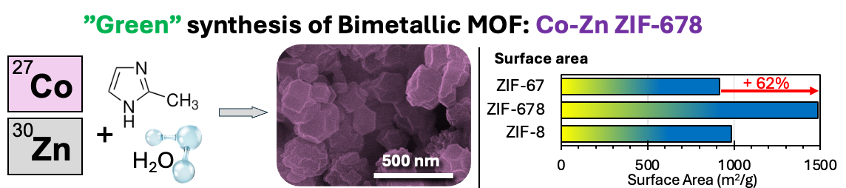
Figure 1. Schematic illustration of the green, water-based synthesis of defect-rich bimetallic Co–Zn ZIF-678 nanocrystals. A relative enhancement in textural properties of up to +62% is observed for the bimetallic ZIF-678 compared to monometallic analogues.
Nanoporous carbon textiles (C-Texts) are highly attractive candidates, either as standalone materials or as substrates, for air and water purification applications due to their high surface area, tunable surface chemistry, low density, flexibility, and cost-effectiveness [6-8]. Nevertheless, their rational optimization remains challenging and relies on two complementary strategies: (i) fine-tuning key physicochemical properties, particularly surface-chemistry heterogeneity, and (ii) nanoengineering through the incorporation of catalytically active nanophases [6-2,8]. Based on our experience, it was determined that, for C-Texts to be effectively utilized as substrates, surface-chemistry heterogeneity must be enhanced, especially through the introduction of oxygen-containing functional groups [2]. In addition, we demonstrated that the detoxification efficiency of C-Texts is not affected by the presence of humidity, which may originate from environmental conditions or from perspiration and breathing during use [9].
Building on these materials-design principles, this work highlights also strategies to enhance the multifunctional performance of C-Texts for air and water decontamination toward large-scale protective media. Initially, the adsorption efficiency of commercial and chemically modified C-Texts was evaluated, identifying the physicochemical parameters most critical to performance, while systematically investigating the influence of humidity under realistic conditions. Further improvements were achieved by developing scalable and cost-effective methods to decorate C-Texts with minimal loadings of mono- and bimetallic MOFs, specifically ZIF-based active phases. The resulting hybrid textiles (Figure 2) exhibited superior removal of diclofenac from water, as well as catalytic detoxification of CWA vapors and droplets, accompanied by exceptionally high antibacterial efficiency. These enhancements are attributed to homogeneous nanoparticle dispersion and synergistic adsorption–catalysis interfacial effects, with oxygen-containing surface functional groups on the C-Texts playing a key role by enabling efficient catalytic detoxification, strong and stable retention of hazardous molecules, and successful crystallization and anchoring of the ZIF nanoparticles.
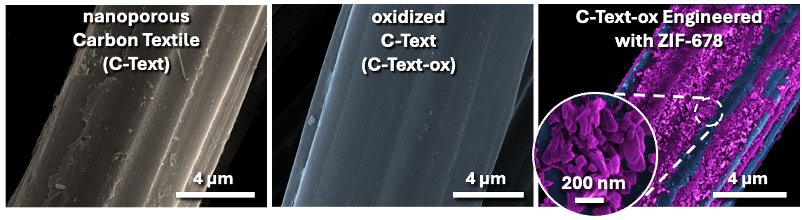
Figure 2. Scanning electron microscopy (SEM) images illustrating the surface morphology evolution of nanoporous carbon textiles (C-Texts): pristine C-Text on the left, oxidized C-Text (C-Text-ox) at the center, and C-Text-ox homogeneously engineered with Co–Zn ZIF-678 nanoparticles on the right. Oxidation induces surface cleaning/roughening and enhanced surface chemical heterogeneity, enabling uniform anchoring of ZIF-678 nanocrystals, as highlighted in the magnified inset.
Acknowledgements
The work is financially supported by the National Science Centre (NCN) of Poland via the SONATA-19 grant 2023/51/D/ST5/01915 (PI: D. Giannakoudakis).
.
14th Czech – Polish Catalytic Symposium (CzePoCat-26), 5-7/2/2026, Institute of Environmental Technology, CEET VSB-Technical University of Ostrava, Czech Republic
INVITED SPEAKER
Novel Nanomaterials Design via Green Water-Based Synthesis: Bimetallic ZIF-Nanostructured g-C3N4 Composites for Multifunctional Environmental Remediation
Dimitrios A. Giannakoudakisa*
a Institute of Chemical Sciences, Faculty of Chemistry, Maria Curie-Sklodowska University, 20-031 Lublin, Poland
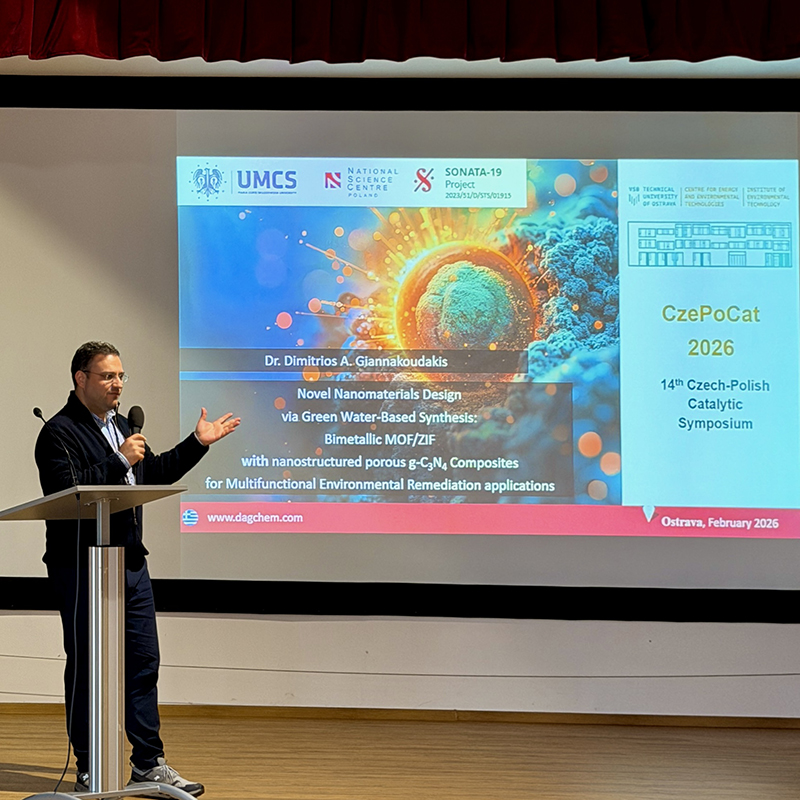
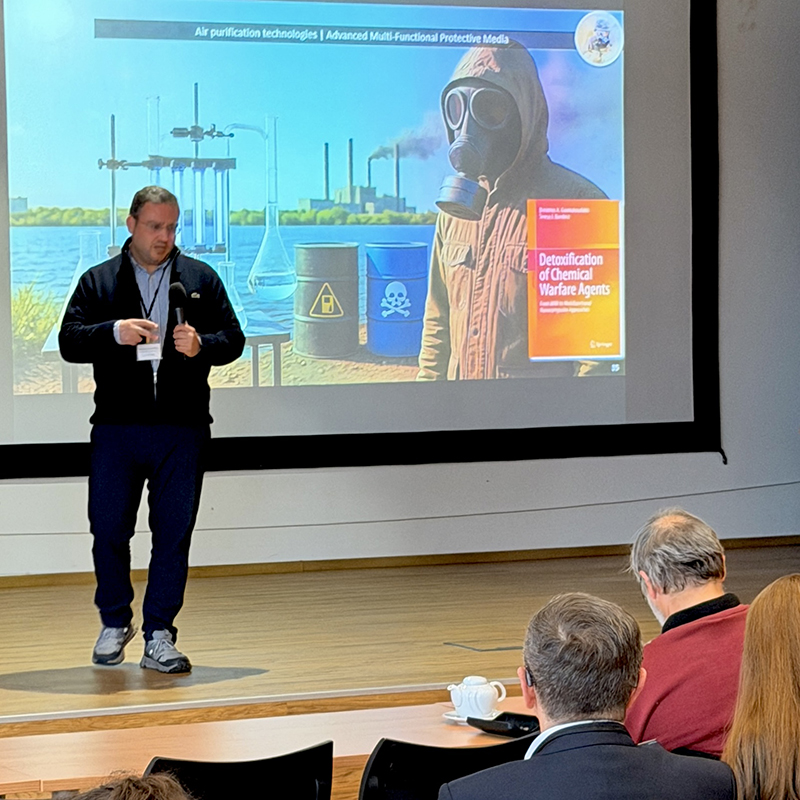
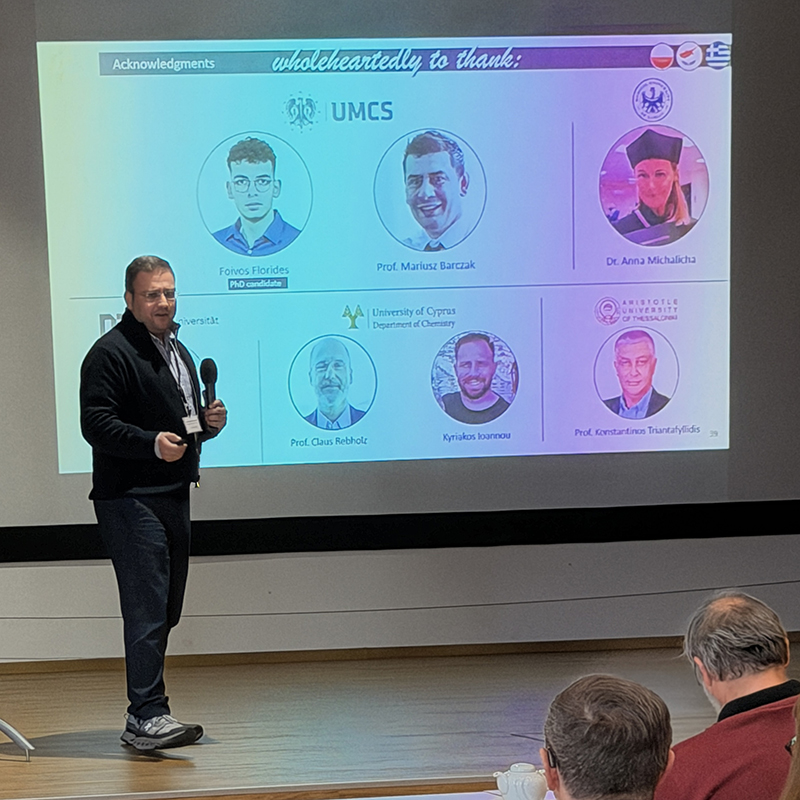
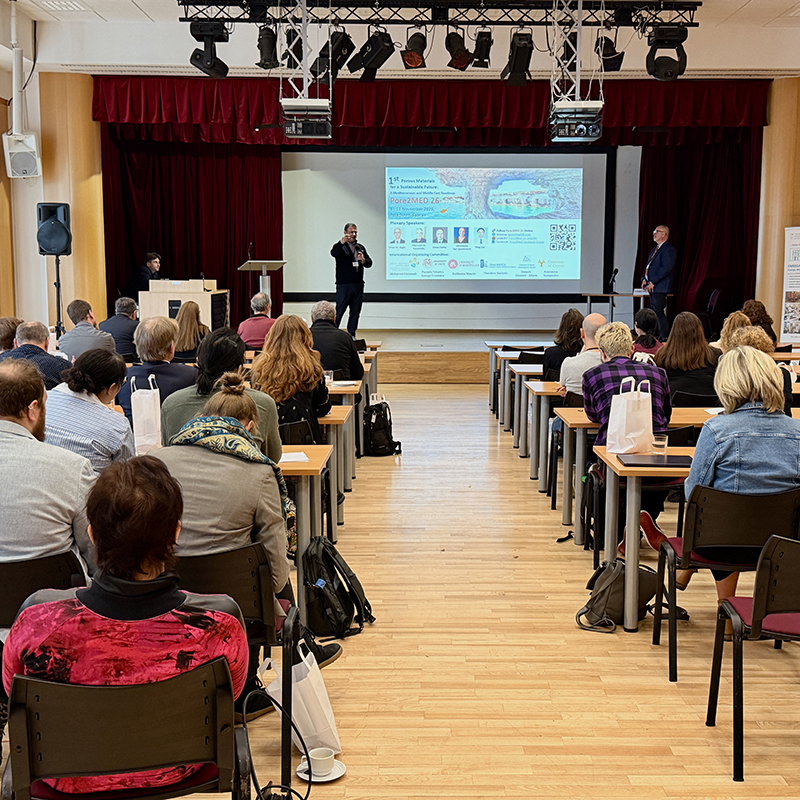
ABSTRACT: The growing complexity of environmental pollution demands multifunctional materials capable of addressing chemically diverse contaminants across both air and water under realistic and sustainable conditions. A hierarchical materials-design strategy is therefore pursued, based on the green synthesis of composite nanomaterials that promote enhanced adsorptive and catalytic activity through interfacial synergy. Central to this approach are physicochemical tuning and the creation of active interfaces between metal–organic frameworks (MOFs) and carbon-based materials, giving rise to synergistic phenomena in the resulting composite systems. These materials exhibit high performance in both unselective detoxification of highly toxic airborne species, such as mustard-gas simulants, and selective catalytic transformations, exemplified by biomass and lignin valorization reactions.
The first part focuses on the green synthesis of nanostructured graphitic carbon nitride (w-g-C₃N₄) using water as an active reagent, demonstrating how controlled polymerization in aqueous media enables nanoscaling and defect engineering without the use of harsh reagents. These structural modifications lead to markedly improved light absorption, charge separation, and photocatalytic efficiency under visible-light irradiation. Consequently, water-derived g-C₃N₄ materials exhibit outstanding performance in selective photocatalytic reactions, highlighting their potential for sustainable pollutant transformation and biomass-inspired valorization.
Moving one step further, water-derived g-C3N4 is employed as a low-loading functional filler in composites with mono- and bimetallic MOFs, with particular emphasis on Co- and Zn-based zeolitic imidazolate frameworks (ZIFs) synthesized exclusively in water. The bimetallic ZIF-678 exhibits significantly higher vapor detoxification performance compared to monometallic ZIFs, while incorporation of approximately 1 wt.% w-g-C3N4 further enhances detoxification efficiency. These improvements are accompanied by pronounced enhancements in key physicochemical properties, leading to increased H2 and CO2 capture capacity, as well as improved antibacterial performance.Overall, this presentation highlights how green synthesis, defect engineering, and compositional synergy can be combined to design next-generation hybrid materials for multifunctional environmental remediation. The integration of photoactive carbon phases with MOFs yields hybrid systems that unify adsorption, catalysis, and photocatalysis, effectively overcoming intrinsic limitations of the individual components.
Acknowledgements: The work is financially supported by the National Science Centre (NCN) of Poland via the SONATA-19 grant 2023/51/D/ST5/01915 (PI: D. Giannakoudakis).
.
2025
7th International Conference, Environmental Engineering and Design | 23-24.10.2025
NanoEngineered porous Carbon textiles as protection media against toxic vapors
Faculty of Chemistry, Maria Curie-Sklodowska University, 20031 Lublin, Poland
ABSTRACT: The rising need for reliable personal protection in hazardous environments, like industrial accidents, chemical spills, fires, and potential chemical warfare, demands advanced materials that go beyond simple barriers. Modern protective media aims to integrate lightweight fabrics with multifunctional capabilities, enabling them not only to capture but also to catalytically neutralize toxic compounds. Such textiles must perform under realistic conditions, including high humidity, which often accompanies intense physical activity or stress. Nanoporous activated carbon textiles (C-Texts) are promising due to their light weight, flexibility, high (nano)porosity, and versatile surface chemistry.[1] Their performance can be further enhanced by nanoengineering with active nanostructured phases deposited on their surface or/and within their pores. Chemical Warfare Agents (CWAs), including blister agents like mustard gas and nerve agents such as sarin, remain persistent threats. While studies on C-Texts’ interactions with toxic vapors and droplets are limited, such insights are critical for advancing protective technologies against CWAs, other hazardous compounds, and biological threats.
This presentation highlights strategies to boost the detoxification performance of nanoporous carbon textiles. We first assessed the adsorption efficiency of commercial C-Texts and identify key physicochemical features. Given humidity’s strong impact under real-life conditions, the role of water was systematically investigated.[2] Progress was further achieved by developing scalable, cost-effective procedures to decorate C-Texts with minimal amounts of nanostructured active phases, like mono- or bimetallic Metal-Organic Frameworks (MOFs).[3] These composite textiles showed superior detoxification of CWA vapors and droplets, owing to homogeneous dispersion of active phases and synergistic interfacial effects. Their main advantage lies in combining catalytic detoxification efficiency with stable retention of captured toxic molecules.
Acknowledgements: The research was also sponsored from the National Science Centre (NCN) of Poland by the SONATA-19 grant 2023/51/D/ST5/01915 and partially by the Army Research Office and was accomplished under Grant Number W911NF-23-1-0204.
References
[1] D. A. Giannakoudakis et.al., Chemical Engineering Journal, 2019, 362, 758–766
[2] D. A. Giannakoudakis et. al. , Journal of Hazardous Materials, 2025, 487, 137155
[3] D. A. Giannakoudakis et. al., RSC Appl. Interfaces, 2025,2, 1275-1287
.

The World Conference on Carbon – Saint-Malo | 29/6 – 4/7 2025
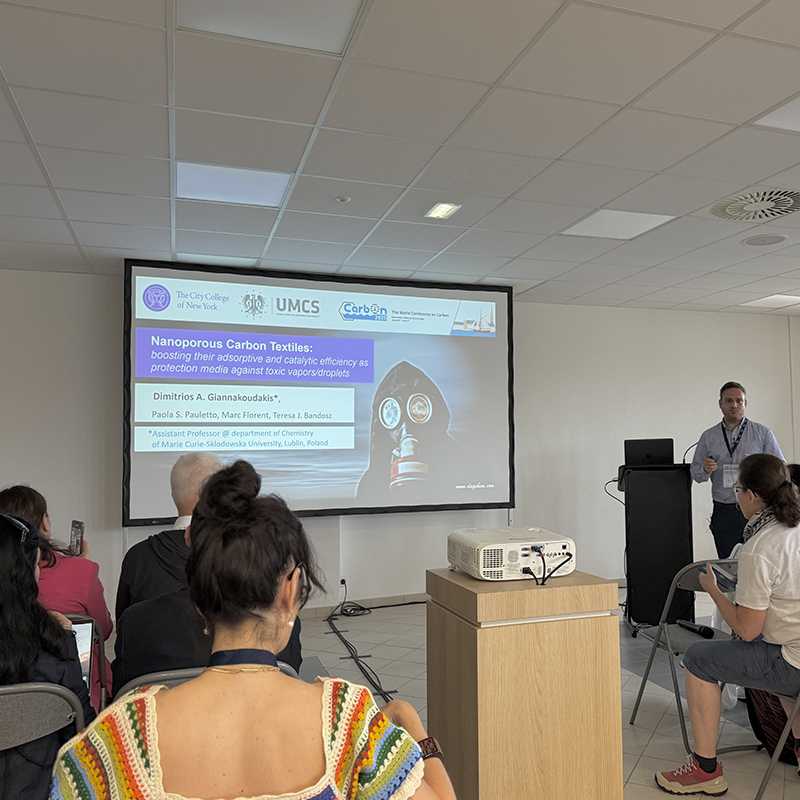
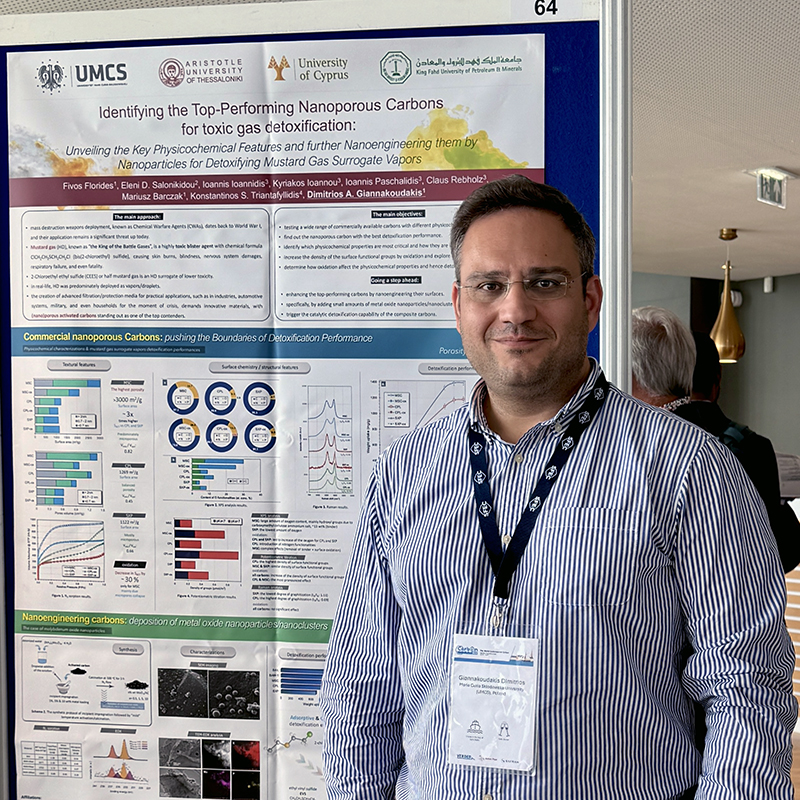
Nanoporous Carbon Textiles: boosting their adsorptive and catalytic efficiency as protection media against toxic vapors/droplets
Dimitrios A. Giannakoudakis1,2*, Paola S. Pauletto1, Marc Florent1, Teresa J. Bandosz2
1 Faculty of Chemistry, Maria Curie-Sklodowska University, 20031 Lublin, Poland
2 Department of Chemistry, The City College of New York, New York, NY 10031, USA
ABSTRACT: The development of modern protection media for real-life application, like uniforms, masks, gloves etc. for industry personnel, fire-workers, soldiers, or even the general population in the case of emergency situations, requires innovative materials’ design strategies. The goal is to synthesize multifunctional fabrics consisting of mutli-layered nano-engineered textiles. These textiles can be capable to simultaneous strongly adsorb and catalytically degrade the targeted hazardous compounds. Nanoporous activated carbon textiles (C-Texts) are a class of materials of unique physicochemical properties, combining high nano-porosity and diverse surface chemical heterogeneity. Considering the option of C-Texts’ nanoengineering by decorating nanostructured active-phases on their surface or even within the pores active, their utilization for protective wearable media/cloths opens many opportunities.
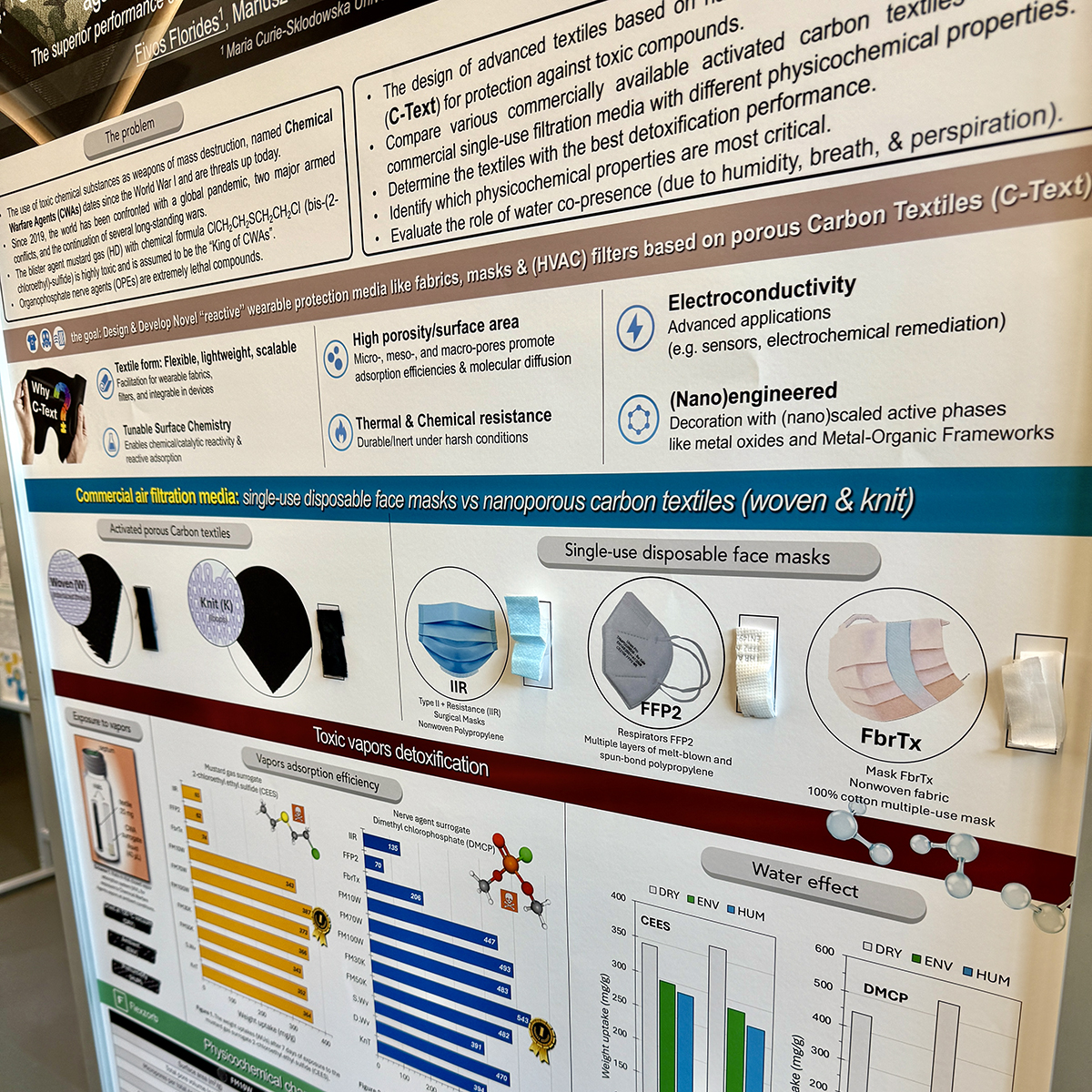
The deployment of toxic compounds as mass destruction weapons, known as Chemical Warfare Agents (CWAs), dates from the First World War, while their appliance is a critical threat even up today. The two major classes of CWAs are the blister agents (like mustard gas) and the nerve gas agents (like sarin and tabun). Most often, CWAs were deployed as vapors or sprays/droplets. Although, the available studies regarding the interaction of active textiles with toxic vapors/droplets are limited, this kind of knowledge is desirable to develop protection media against CWAs as well as other hazardous compounds or viruses. The focus of this presentation is on boosting the activated nanoporous carbon textiles detoxification performance. Initially, we tested various commercially available C-Texts to determine their adsorptive efficiency and the reasons behind it. Going a step forward, C-Texts were thermochemically modified (C-Text/S/N) to introduce S and/or N containing surface functionalities and further tune the textural features. This approach had a positive impact on the adsorptive protection, while catalytic decomposition to less- or non-toxic compounds was observed more intense for C-Text/S/N. It was found also that the presence of humidity plays a pivotal role on the catalytic, but not on the adsorptive detoxification. The next step involved the decoration of minimal amount of various nano-structured active phases, such as Metal Organic Frameworks (MOFs) or metal oxides (MOXs) nanoparticles/nanoclusters, following practical and economically feasible procedures. These composite textiles revealed superior adsorptive and catalytic detoxification capability against CWAs vapors/droplets predominately because of the homogeneous dispersion of the active phase as well as due to the arisen synergistic effects. Another key asset of some nano-textiles was their ability to be highly hydrophobic, a very crucial parameter for specific applications.









.
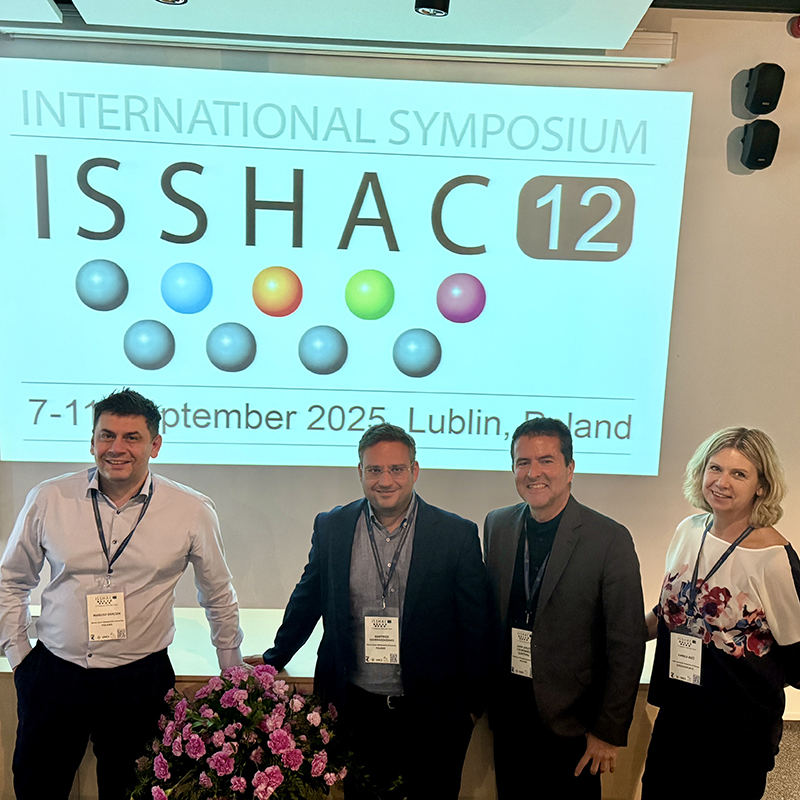
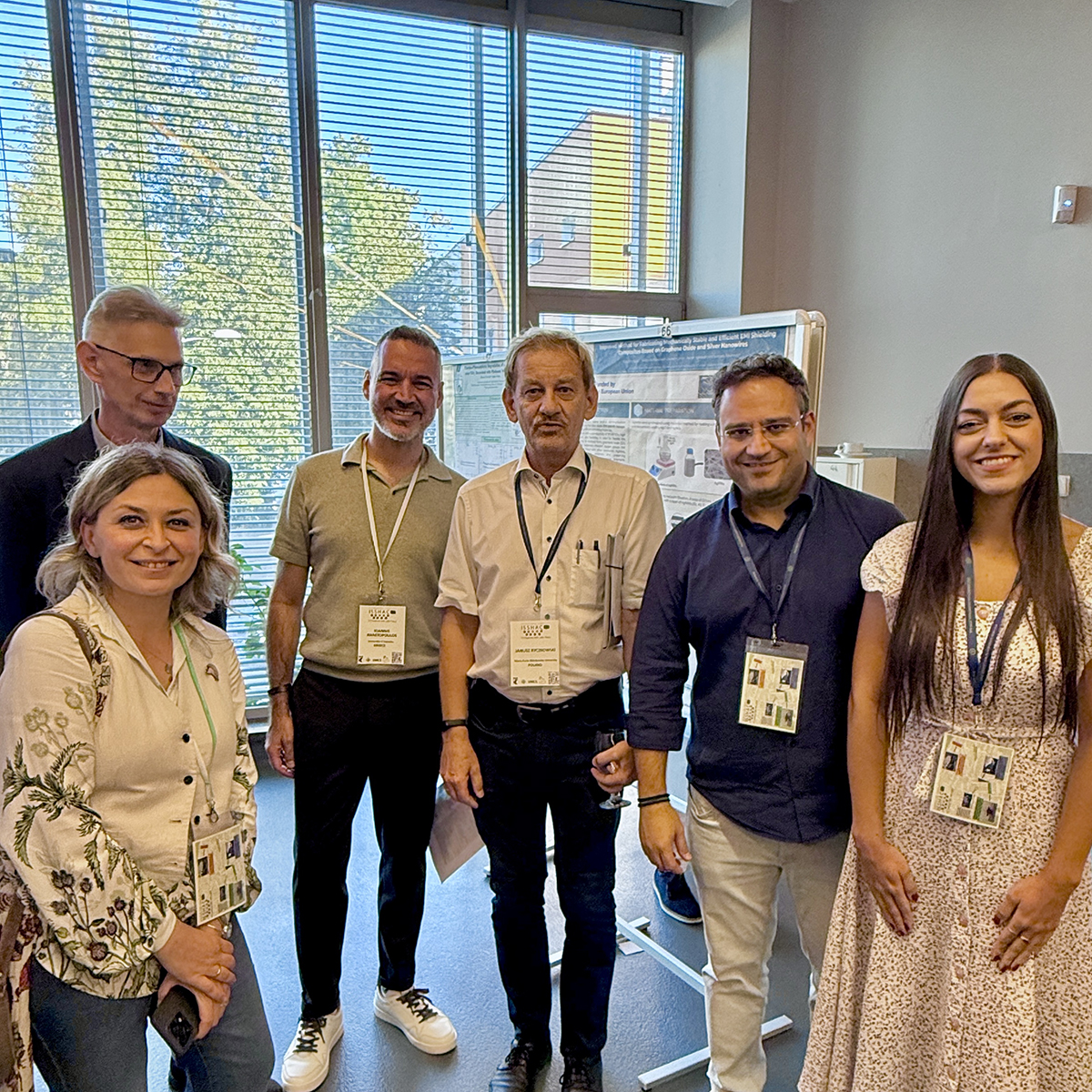
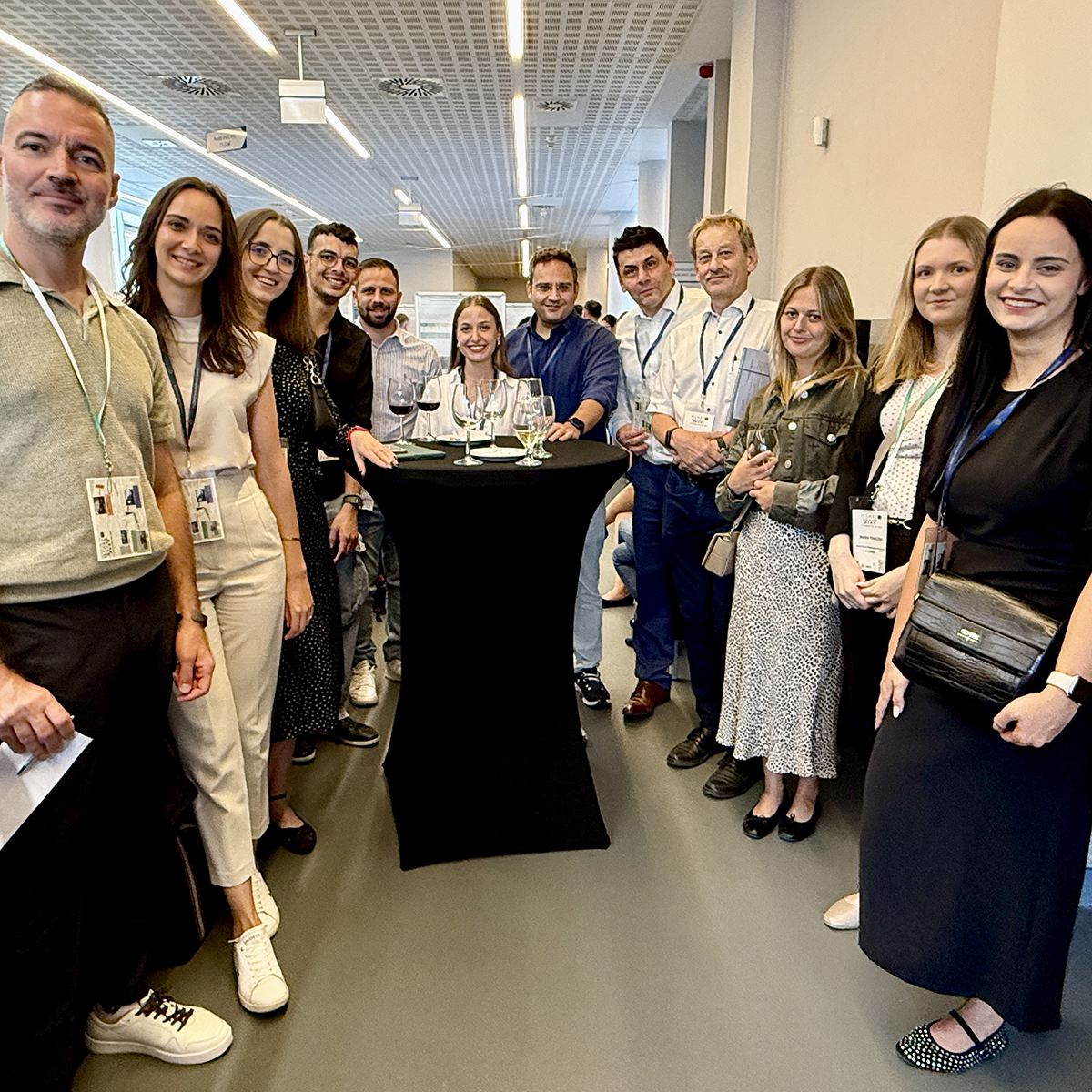
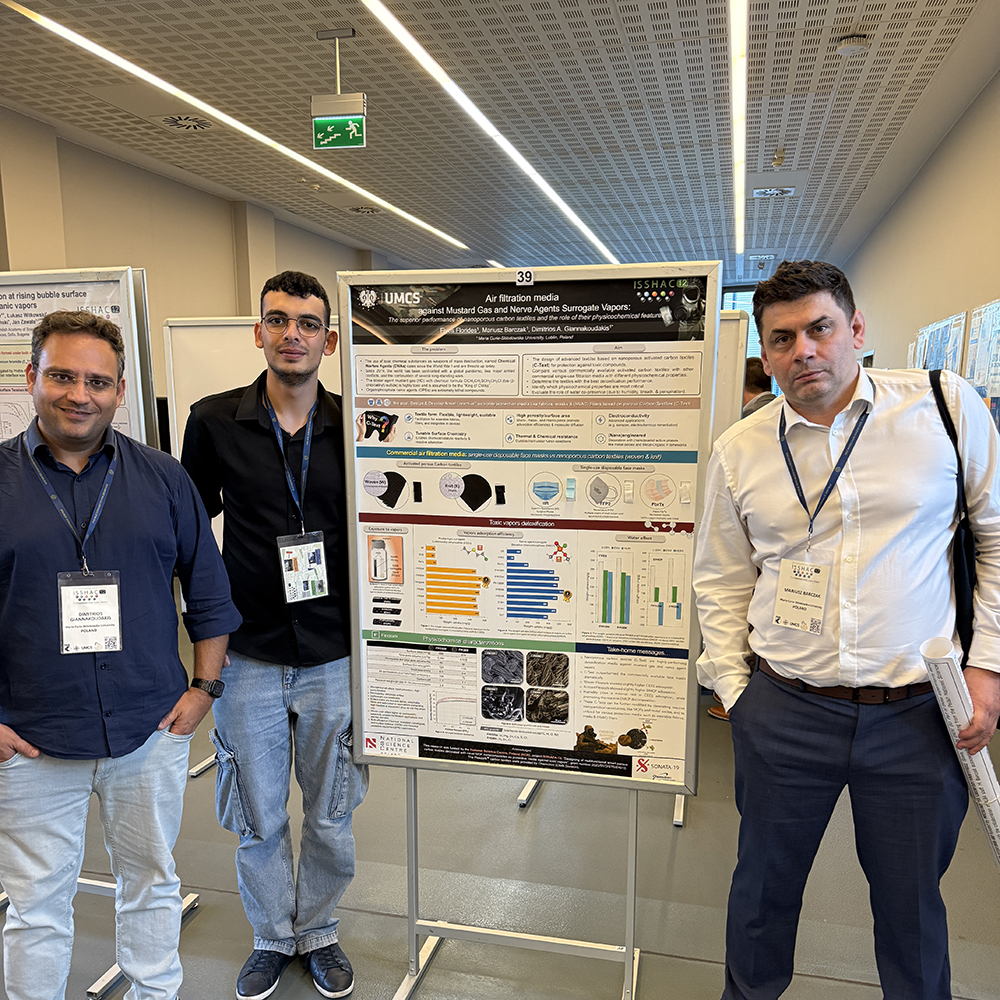
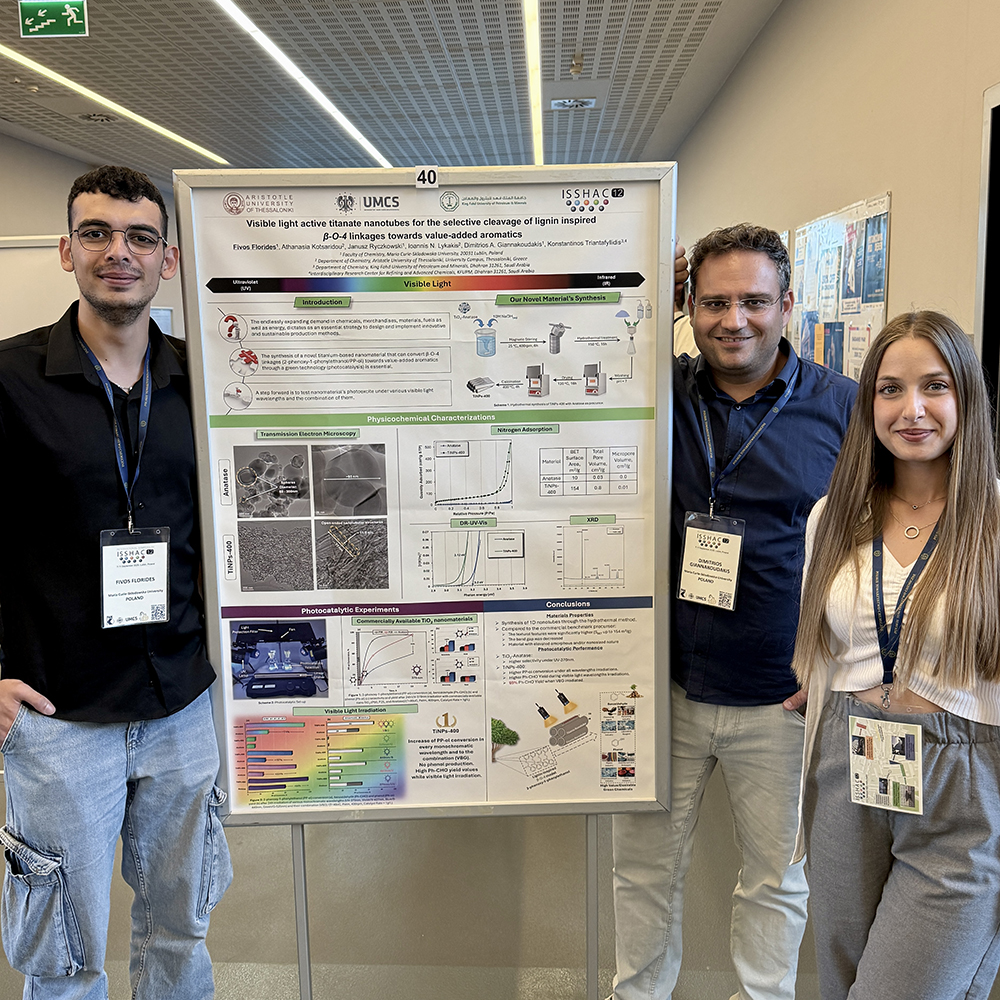
12th International Symposium Effects of Surface Heterogeneity in Adsorption, Catalysis and related Phenomena, 7-11/9/2025 | Lublin, Poland
INVITED SPEAKER & Scientific Committee
Nano-Engineered Porous Carbon Textiles: Synergistic Adsorptive and Catalytic Protection against Chemical Threats
Dimitrios A. Giannakoudakisa,b*, Fivos Floridesa, Paola S. Paulettob, Marc Florentb, Mariusz Barczaka, Teresa J. Bandoszb
a Faculty of Chemistry, Maria Curie-Sklodowska University, 20031 Lublin, Poland
b Department of Chemistry, The City College of New York, New York, 10031, USA
ABSTRACT: Developing modern protective media, such as uniforms, masks, and gloves, for industrial workers, firefighters, soldiers, and civilians in hazardous or life-threatening environments requires innovative material design. The current goal is to create multifunctional fabrics based on nano-engineered approaches, capable of both adsorbing and catalytically degrading hazardous compounds. A key requirement is that such textiles remain effective not only in dry conditions but also under high humidity, reflecting real scenarios such as heavy sweating during physically demanding or high-stress situations.
Nanoporous activated carbon textiles (C-Texts) are assumed as promising materials due to their lightweight, flexibility, high (nano)porosity, and versatile surface chemistry.[1] Their potentials can be further enhanced by nanoengineering with active nanostructured phases deposited on their surface or within their pores. Chemical Warfare Agents (CWAs), including blister agents like mustard gas and nerve agents such as sarin, remain persistent threats since World War I. While studies on the interaction of carbon textiles with toxic vapors and droplets are limited, such knowledge is crucial for advancing protective technologies against CWAs, other hazardous compounds, and even biological threats.
This presentation highlights strategies to enhance the detoxification performance of nanoporous carbon textiles. We first assessed the adsorption efficiency of commercial C-Texts, focusing on the physicochemical features most critical for performance. Because humidity can strongly affect detoxification under real-life conditions, the role of water was also systematically investigated.[2] Further progress was achieved by developing scalable, cost-effective procedures to decorate C-Texts with minimal amounts of nanostructured active phases, such as mono- or bimetallic Metal-Organic Frameworks (MOFs) and metal oxides (MOXs).[3] These composite textiles demonstrated superior detoxification of CWA vapors and droplets, attributed to homogeneous dispersion of the active phases and synergistic interfacial effects. Their key advantage lies in combining catalytic detoxification efficiency with high and stable retention of captured toxic molecules.
Acknowledgements: DAG, FF, and MB acknowledge the financial support from the National Science Centre (NCN) of Poland by the SONATA-19 grant 2023/51/D/ST5/01915. The research was also sponsored by the Army Research Office and was accomplished under Grant Number W911NF-23-1-0204.









References
[1] D. A. Giannakoudakis, M. Barczak, M. Florent, T. J. Bandosz, Chemical Engineering Journal, 362 (2019), 758–766
[2] D. A. Giannakoudakis, P. S. Pauletto, M. Florent, T. J. Bandosz, Journal of Hazardous Materials, 487 (2025), 137155
[3] D. A. Giannakoudakis, M. Barczak, F. Pearsall, S. O’Brien, T. J. Bandosz, Chemical Engineering Journal, 384 (2020), 123280