AWARDS – SCHOLARSHIPS
Research Internship Award at the University of Cyprus (1 July – 29 August 2025)
As part of the Education and Research International Network project, financed by the National Agency for Academic Exchange (NAWA) under the STER NAWA Program – Internationalization of Doctoral Schools, we carried out a two-month research internship at the Department of Chemistry, University of Cyprus, under the scientific supervision of Professor Ioannis Pashalidis.
The internship focused on the development and evaluation of advanced porous materials for environmental remediation and protection against hazardous contaminants. In particular, the research investigated the application of nanoporous activated carbon textiles (apCTs), metal–organic frameworks (MOFs), and their composites for the removal of radionuclides from water and wastewater, as well as from air streams.
The work included specialized training in radionuclide analytical techniques, experimental studies on uranium and radium removal from contaminated water, and the assessment of filtration materials under realistic airborne exposure conditions using continuous-flow systems. These activities provided valuable insights into radionuclide adsorption mechanisms and the design of multifunctional materials with enhanced adsorption and catalytic properties.
The internship significantly strengthened the collaboration between Maria Curie-Skłodowska University (Poland) and the University of Cyprus, enabling knowledge exchange, access to specialized research infrastructure, and the development of innovative technologies for water purification, air filtration, and environmental protection. The results obtained during the mobility are expected to contribute to future scientific publications and support the development of next-generation materials for the remediation of radioactive and hazardous pollutants.
PhD-related Publications
1.
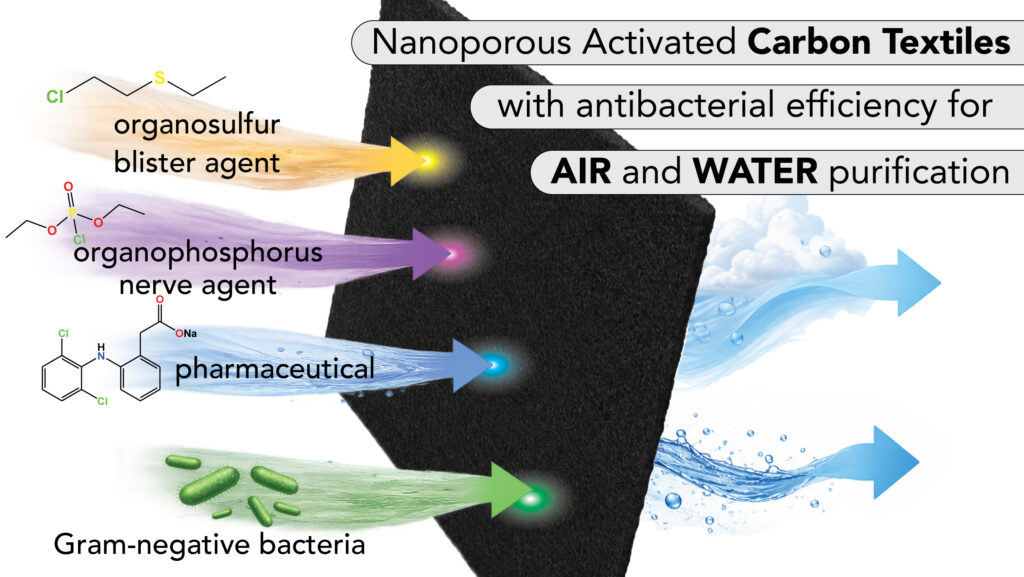
Are commercial filtration media efficient under realistic environmental conditions? The uprise of Nanoporous Activated Carbon Textiles with antibacterial efficiency for air and water purification
Fivos Florides1, Marlena Bytniewska1, Anna Michalicha2, Mariusz Barczak1, Dimitrios A. Giannakoudakis1*
1 Faculty of Chemistry, Maria Curie-Sklodowska University, 20031 Lublin, Poland
2 Chair and Department of Biochemistry and Biotechnology, Medical University of Lublin, Chodźki 1, 20-093 Lublin, Poland
submitted
Oral presentations at Conferences
2026
9th Environmental Conference of Macedonia (EcoMac-9) • 8–10 May 2026, ΚΕDΕΑ, AUTH, Thessaloniki, Greece
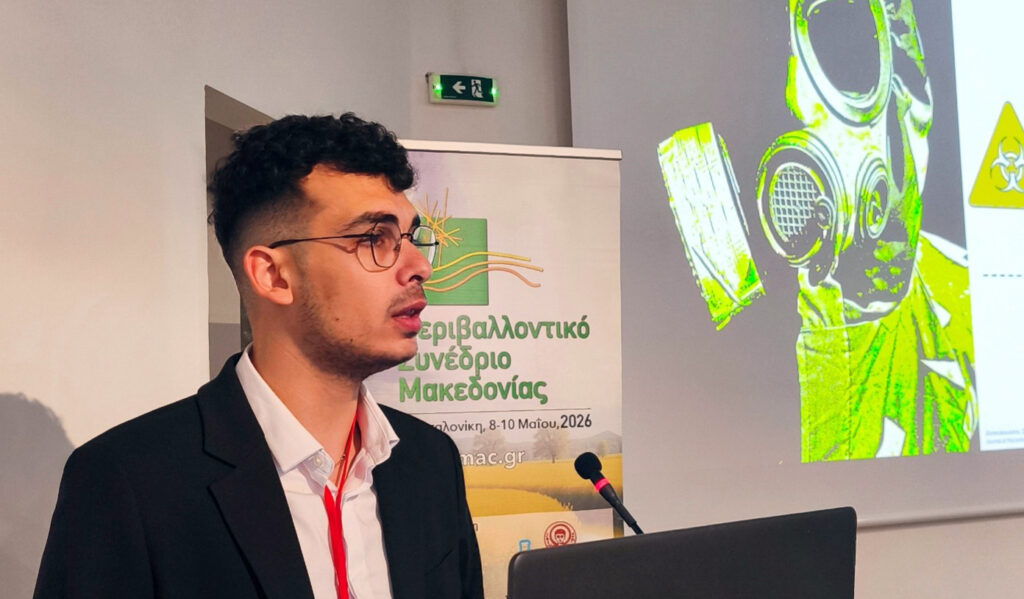
Air filtration against Chemical Warfare Agent Surrogate Vapors: The optimization of Green ZIF Synthesis and their Deposition on Activated Carbon Textiles
Fivos Florides1, Kyriakos Ioannou1,2, Nikolaos Kostoglou3, Claus Rebholz2, Mariusz Barczak1, Dimitrios Α. Giannakoudakis1
1Institute of Chemical Sciences, Faculty of Chemistry, Maria Curie-Sklodowska University, 20-031 Lublin, Poland
2Department of Mechanical and Manufacturing Engineering, University of Cyprus, 2109 Nicosia, Cyprus
3Institute of Geoenergy, Foundation for Research and Technology-Hellas, 73100, Chania, Greece
ABSTRACT
The use of toxic chemicals as chemical warfare agents since World War I has made the development of effective protective materials essential. In this context, nanoporous activated carbon materials constitute a promising platform for protective fabrics due to their high surface area and tunable surface properties. However, their limited detoxifying properties remain a key drawback. The incorporation of meta-organic frameworks can significantly enhance their functionality owing to their porous structure and catalytic activity. This study aimed to develop an optimal “green” synthesis route for mono- and bimetallic zeolitic imidazolate frameworks (ZIFs) and to achieve their efficient deposition onto activated carbon fabrics. The resulting materials were evaluated for their detoxification performance against simulants of chemical warfare agents, demonstrating that bimetallic and defect-rich ZIF structures exhibit superior performance by improving physicochemical properties, ultimately leading to enhanced detoxification efficiency.
Acknowledgements
The work is financially supported by the National Science Centre (NCN) of Poland via the SONATA-19 grant 2023/51/D/ST5/01915 (PI: D. Giannakoudakis).
Porous Materials for Environmental Applications (PMEA 2026) • 15–19 March 2026 | Białka Tatrzańska, Poland
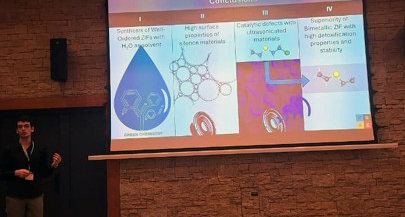
Multifunctional Bimetallic MOFs/ZIFs for Air and Water Purification: Optimization of Water-Based Mechanochemical-Assisted Green Synthesis
Fivos Floridesa*, Kyriakos Ioannoua,b, Marlena Bytniewskaa, Anna Michalichac, Nikolaos Kostogloud, Claus Rebholzb, Mariusz Barczaka, Dimitrios A. Giannakoudakisa
a Institute of Chemical Sciences, Faculty of Chemistry, Maria Curie-Sklodowska University, 20-031 Lublin, Poland
b Department of Mechanical and Manufacturing Engineering, University of Cyprus, 2109 Nicosia, Cyprus
c Chair and Department of Biochemistry and Biotechnology, Medical University of Lublin, Chodźki 1, 20-093 Lublin, Poland
d Institute of Geoenergy, Foundation for Research and Technology-Hellas, 73100, Chania, Greece
ABSTRACT
The escalating challenges of environmental pollution necessitate multifunctional processes that synergistically combine adsorption and catalytic activity for efficient air and water remediation. Advanced nanomaterials play a central role in delivering high performance while maintaining sustainability. Over the last two decades, Metal-Organic Frameworks (MOFs) have attracted significant attention due to their exceptionally high surface area, tunable pore structure, and versatile chemical functionality, facts that establish them as prosperous candidates for air and water purification. However, issues such as structural instability, especially upon exposure to humid conditions, high synthesis costs, and limited regeneration efficiency continue to challenge their practical real-life applications of MOFs [1].
Introduced during World War I, Chemical Warfare Agents (CWAs) remain among the most hazardous classes of chemicals used as weapons, necessitating the development of advanced materials for their effective capture and catalytic detoxification. Mustard gas or bis(2-chloroethyl) sulfide (HD), a blister agent, was the most widely deployed CWA and hence is referred to as the “King of Battle Gases”. The main critical aspect upon exposure is its ability to penetrate through regular textiles, causing skin burns, blindness, nervous system failure, and even death [2]. Since, HD is highly toxic and banned for any use, 2-chloroethyl ethyl sulfide (CEES) was used for lab purposes as a surrogate. In parallel, diclofenac (DICL) is regarded as a contaminant of significant concern in water purification, as it is widely prescribed as an analgesic and anti-inflammatory drug and is among the most frequently detected pharmaceuticals in wastewater treatment plant effluents [3].
In this work, we present the optimization of an established ultrasound-assisted green, water-based synthesis of bimetallic Co/Zn zeolitic imidazolate framework (ZIF-678) nanoparticles. The influence of ultrasound-assisted synthesis compared to conventional magnetic stirring was systematically evaluated to identify the most effective synthesis strategy and to elucidate the impact of mechanochemical energy input on the physicochemical properties of the resulting materials. Both monometallic and bimetallic ZIF powders were assessed against representative organic contaminant simulants in aqueous and airborne environments, using diclofenac sodium (DICL) as a model water pollutant and CEES as a simulant of airborne chemical threats. The ZIF powders exhibited high multifunctional detoxification efficiency, integrating adsorption with catalytic degradation to effectively neutralize CEES, with Co-Zn co-presence significantly enhancing catalytic activity. Notably, the bimetallic ZIF synthesized with an equimolar Co:Zn ratio (1:1) displayed the highest overall performance, indicating an optimal synergistic interaction between the two metal centers. In parallel, efficient removal of diclofenac (DICL) from water was achieved, confirming the suitability of the materials for aqueous micropollutant remediation. Additionally, the antibacterial activity of the ZIF powders was evaluated, revealing that Co incorporation substantially improved the inactivation of E. coli cells, further highlighting the multifunctional character of the optimized bimetallic system.
Acknowledgements
The work is financially supported by the National Science Centre (NCN) of Poland via the SONATA-19 grant 2023/51/D/ST5/01915 (PI: D. Giannakoudakis).
References
[1] D. A. Giannakoudakis, P. S. Pauletto, M. Florent, and T. J. Bandosz, RSC Applied Interfaces, 2 (2025), 1275.
[2] D. A. Giannakoudakis, P. S. Pauletto, M. Florent, and T. J. Bandosz, J Hazard Mater, 487 (2025), 137155.
[3] P. Schröder et al., Environmental Science and Pollution Research, 23 (2016), 12835–12866.
2025
1st Pancyprian Conference of Chemistry • 19–21 November 2025 | University of Cyprus, Nicosia, Cyprus
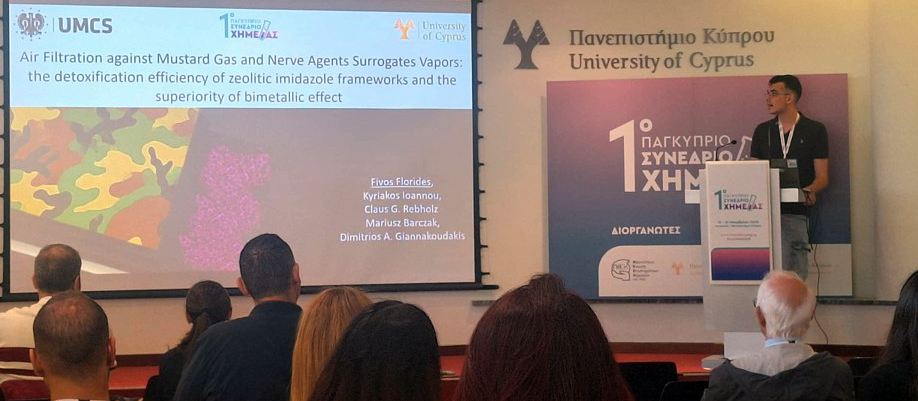
Air filtration against Mustard Gas and Nerve Agents Surrogate Vapors: the detoxification efficiency of zeolitic imidazole frameworks and the superiority of bimetallic effect
Fivos Florides1, Kyriacos Ioannou2, Mariusz Barczak1, Dimitrios A. Giannakoudakis1*
1 Faculty of Chemistry, Maria Curie-Sklodowska University, Maria Curie-Sklodowska Sq. 3, 20031, Lublin, Poland
2 Department of Mechanical and Manufacturing Engineering, University of Cyprus, 1 Panepistimiou Avenue, 2109, Nicosia, Cyprus
ABSTRACT:
During World War I, the world was introduced to the use of toxic Chemical Warfare Agents (CWAs). Among the various compounds that were utilized as weapons, the blister agent mustard gas (HD) was most widely deployed. Another category of fatal compounds developed as CWAs are the organophosphate nerve agents (OPEs). Nowadays, the world is confronted with a global pandemic and various armed conflicts, hence the development of effective protective media is a major necessity, even for civilians.
Zeolitic Imidazole Frameworks (ZIFs) are constructed by the coordination of tetrahedrally coordinated transition metal ions and imidazole linkers. Their uniqueness lies on the ordered crystallographic structure, nano-porosity, and high surface area, characteristics essential for nanoengineering protection media. Porous carbon textiles are also very prosperous materials for design and develop novel Wearable Protective Fabrics (WPFs) and single- or multi-use face masks, due to their lightweight and flexible nature, thermal & chemical resistance, high porosity/surface area and tunable surface chemistry1,2. The latter feature is particularly important, since controlled surface oxidation is essential for enabling the efficient nanoengineering and functionalization of the textile surface1.
Our research focuses on the well-dispersed and firmly anchored deposition of ZIF nanoparticles onto activated nanoporous carbon textiles. The novelty of the studied ZIFs lies in the bimetallic Co-Zn composition, with the ultrasound-assisted synthesis of frameworks taking place using water as solvent. We evaluated both the mono- and bi-metallic ZIF powders and the corresponding composite textiles (C-Text-ZIF) against vapors of HD and OPE surrogates. The ZIFs exhibited high multifunctional detoxification efficiency, combining both adsorptive and catalytic functions. Even more interestingly, their color gradually changed only upon exposure to the nerve agent surrogate dimethyl chlorophosphate (DMCP), while the co-presence of Co-Zn led to an increase catalytic efficiency. In the case of the C-Text-ZIFs, a clear multifunctionality was observed, as their ability to adsorb and decompose toxic vapors was enhanced compared to the pristine carbon textile. The most notable effect of nanoengineering the C-Text was the increased retention strength (as indicated by desorption tests), despite the significant reduction in porosity caused by the presence of the frameworks.
Acknowledgments: This research is financial supported from the National Science Centre (NCN) of Poland by the SONATA-19 grant 2023/51/D/ST5/01915.
References:
1. Giannakoudakis, D. A. et al. Ultrahigh surface area nanoporous carbon for air and water purification: Pushing the boundaries and unveiling the key physicochemical features. Chemical Engineering Journal 524, 169457 (2025).
2. Giannakoudakis, D. A., Pauletto, P. S., Florent, M. & Bandosz, T. J. Interface-engineered UiO-66 nanoparticles on porous carbon textiles for reactive protection against toxic 2-chloroethyl ethyl sulfide. RSC Applied Interfaces 2, 1275–1287 (2025).
Poster Awards
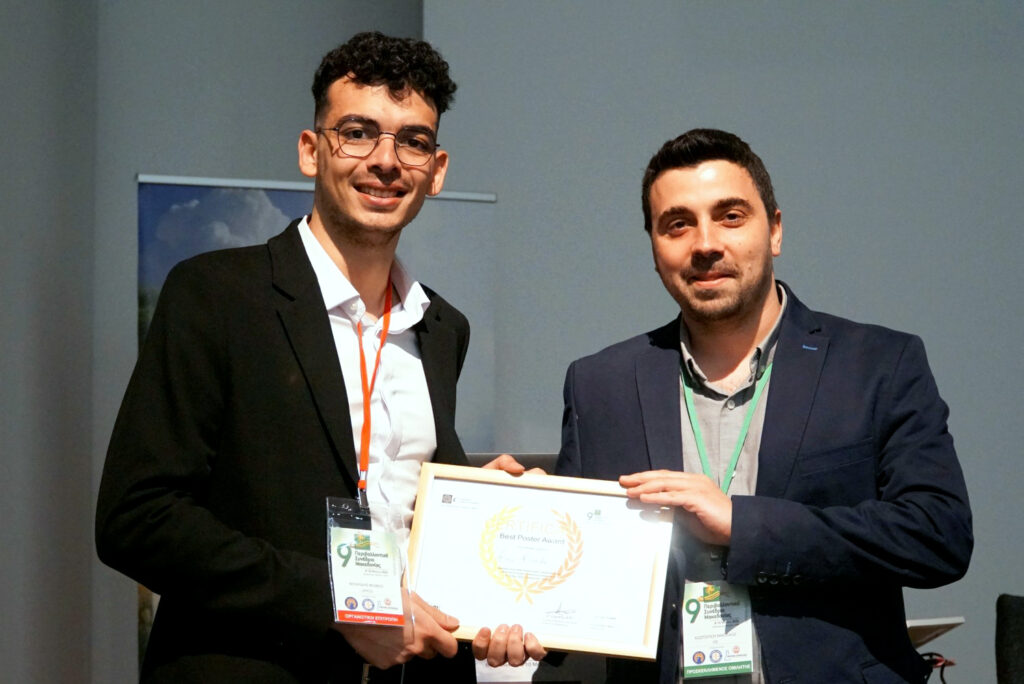
1. Best Poster Award in Carbon Materials – 9th Environmental Conference of Macedonia (ECOMAC-9)
We are honored to have received the Best Poster Award in Carbon Materials at the 9th Environmental Conference of Macedonia (ECOMAC-9) for our poster entitled:
“Are Commercial Filtration Media Efficient against Toxic Vapors? The Uprise of Nanoporous Activated Carbon Textiles.”
The award was presented by Dr. Nikolaos Kostoglou, who served as Session Chair and member of the Scientific Committee of ECOMAC-9, on behalf of C—Journal of Carbon Research (MDPI). The distinction recognized the scientific excellence and outstanding quality of the poster presentation.
Our research focused on assessing the effectiveness of commercially available filtration media against toxic vapors and demonstrated the superior potential of nanoporous activated carbon textiles as next-generation filtration materials. The study highlighted the critical role of advanced carbon-based structures in enhancing adsorption performance and improving protection against hazardous airborne contaminants.
Receiving this award is a great honor and a valuable recognition of our research efforts in the fields of carbon materials and air filtration technologies. We are sincerely grateful to Dr. Kostoglou, the Scientific Committee of ECOMAC-9, and C—Journal of Carbon Research (MDPI) for this distinction and their support of researchers working to advance innovative solutions for environmental protection and chemical safety.
This recognition further motivates us to continue developing advanced carbon-based materials and sustainable technologies for the efficient removal of hazardous airborne contaminants and the protection of human health and the environment.
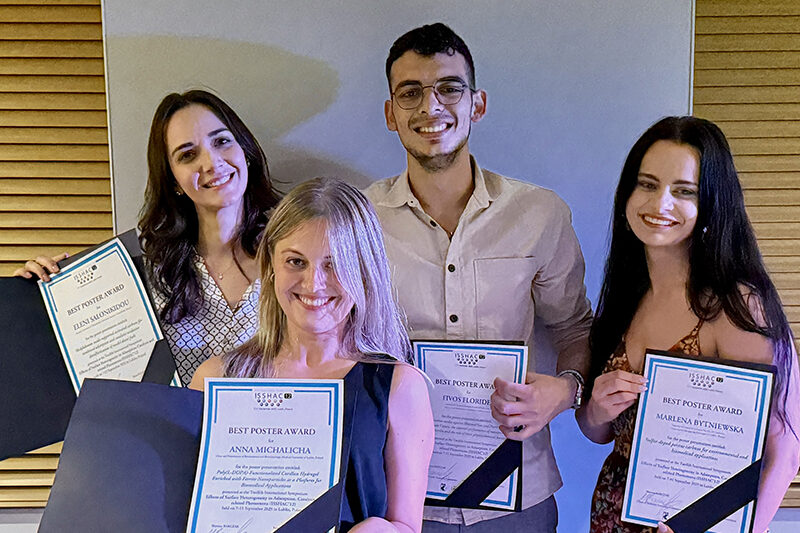
2. Best Poster Award – ISSHAC-12 | 7–11 September 2025 | Lublin, Poland
We are honored to have received the Best Poster Award at the 12th International Symposium on Safety and Health in Agriculture and Chemical Industries (ISSHAC-12) for our poster entitled:
“Air Filtration Media against Mustard Gas and Nerve Agents Surrogate Vapors: The Superior Performance of Nanoporous Carbon Textiles and the Role of Their Physicochemical Features.”
This award was granted by the Scientific Committee of ISSHAC-12 in recognition of the scientific quality, innovation, and significance of the presented research. Our study investigated the effectiveness of advanced nanoporous carbon textiles for the adsorption and filtration of surrogate vapors representing mustard gas and nerve agents. Particular emphasis was placed on understanding how the physicochemical characteristics of these materials influence their protective performance.
Receiving this distinction from the Scientific Committee is a great honor and highlights the importance of developing next-generation filtration materials for chemical protection and environmental safety. We are grateful to the conference organizers, the Scientific Committee, and our collaborators for their support and recognition of this work. This award further motivates us to continue advancing research on innovative carbon-based materials for air purification and protection against hazardous chemical agents.
Poster presentations at Conferences
2026
9th Environmental Conference of Macedonia (EcoMac-9) • 8–10 May 2026 | ΚΕDΕΑ, AUTH, Thessaloniki, Greece
Are commercial filtration media efficient against toxic vapors? The uprise of Nanoporous Activated Carbon Textiles
Fivos Florides1, Marlena Bytniewska1, Anna Michalicha2, Mariusz Barczak1, Dimitrios A. Giannakoudakis1
1 Faculty of Chemistry, Maria Curie-Sklodowska University, 20031 Lublin, Poland
2 Department of Biochemistry and Biotechnology, Medical University of Lublin, Chodźki 1, 20-093 Lublin, Poland
ABSTRACT:
The increasing need for protection against toxic airborne hazards, including Chemical Warfare Agents (CWAs) such as mustard gas (HD) and organophosphate nerve agents, has driven the development of advanced filtration materials. In this work, commercially available filtration media are evaluated against surrogate vapors, with emphasis on nanoporous activated carbon textiles (ACTs). Due to their high surface area, tailored porosity, and tunable surface chemistry, ACTs demonstrate superior adsorption and retention compared to conventional masks and filtration materials. In contrast, widely used single-use commercial face masks and air filtration sponges were found to provide limited protection against toxic vapors. The influence of humidity is also examined, highlighting its critical role in adsorption behavior under realistic conditions.
Beyond air purification, ACTs show strong potential in water treatment applications. Activated carbons have demonstrated antibacterial activity against Escherichia coli, a priority pathogen according to the World Health Organization, while pharmaceuticals such as Diclofenac (included in Implementing Decision (EU) 2015/495) can be effectively removed. Surface chemical functionalization, significantly enhances adsorption capacity, reaching up to 500 mg g-1. These findings highlight ACTs as multifunctional materials for integrated air and water remediation, as well as advantageous protection media/filters.
Acknowledgements: This research was funded by the National Science Centre, Poland (NCN), via a SONATA-19 grant (number 2023/51/D/ST5/01915).
2025
Twelfth International Symposium Effects of Surface Heterogeneity in Adsorption, Catalysis and related Phenomena (ISSHAC-12) • 7–11 September 2025 | Lublin, Poland
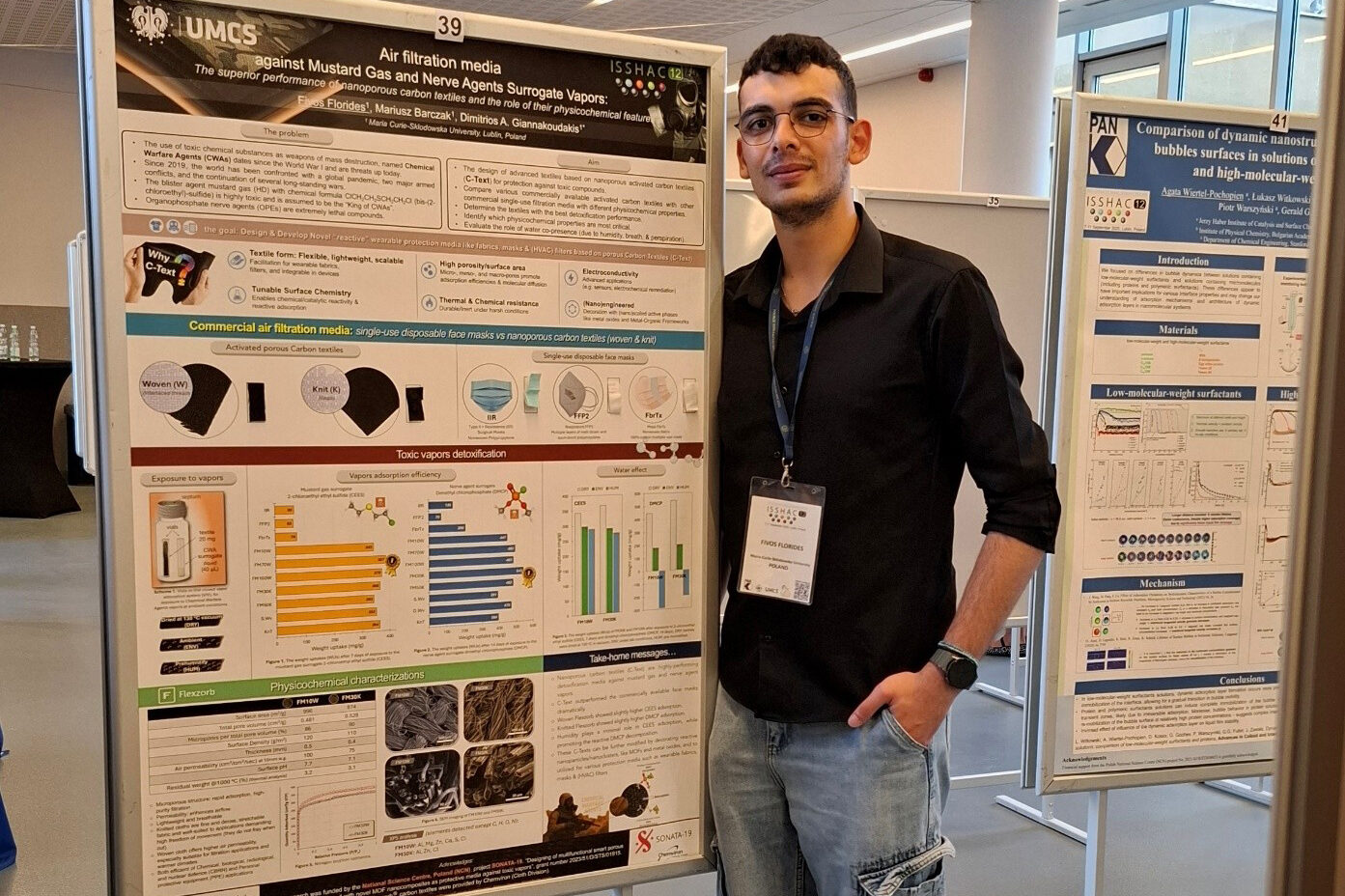
Air filtration media against Mustard Gas and Nerve Agents Surrogate Vapors: the superior performance of nanoporous carbon textiles and the role of their physicochemical features
Fivos Floridesa, Mariusz Barczaka, Dimitrios A. Giannakoudakisa*
aFaculty of Chemistry, Maria Curie-Sklodowska University, 20031 Lublin, Poland
ABSTRACT:
Since 2019 the world has been confronted with a global pandemic, two major armed conflicts and the continuation of several long-standing wars. The use of toxic chemical substances as Chemical Warfare Agents (CWAs) dates since the World War I when various compounds such as the blister agent mustard gas (HD) were deployed, while the organophosphate nerve agents (OPEs) were developed. In all cases, these threats underscored a common necessity: the development of effective protective media.
The design of advanced materials and textiles based on nanoporous activated carbon phases for applications as protective layers of war fighters’ garments, flexible parts of gas masks, or as easy-to-use single-use/disposable face masks for protection against toxic gaseous pollutants, is at the top of modern demands. Owing to their exceptional mechanical strength, high specific surface area, low density, and potential of functionalization by various surface functional groups, carbon-based textiles are of particular interest for the detoxification of CWAs vapors.
The aim of this work is to evaluate the detoxification performance of various commercially available activated carbon textiles against HD and OPEs surrogates’ vapors. The wide range of carbons that are used will help to identify the major physicochemical properties of textiles that play a key role on their high detoxification capability. Additionally, plenty of other filtration media, like single-use commercial masks used during the COVID period and filtration media used for air ventilation, were tested for the sake of comparison.
Taking a step further, the role of water co-presence was also investigated, as environmental humidity and body perspiration are important factors to consider for real-life applications.
Acknowledgements: DAG, FF, and MB acknowledge the partial financial support from the National Science Centre (NCN) of Poland by the SONATA-19 grant 2023/51/D/ST5/01915.
.